What if roadside assistance worked
like Uber?

What if roadside assistance worked like Uber?

What if roadside assistance worked like Uber?

What if roadside assistance worked like Uber?

VOZZi is a regional roadside assistance platform designed to modernize how drivers access help on the road. Through the VOZZi mobile app, users could purchase assistance plans, request towing services, or call for immediate support.

Role

UX/UI design lead

Timeline

March 2021 -

October 2023

Tools used

Results

400%

growth in digital

product sales

200k

growth in the

active user base

80%

reduction in service

waiting time

35%

increase in

user activation

Context

I led the UX/UI design of VOZZi, the first digital roadside assistance app in the Balkans. I designed core flows to reduce trust friction, introduced transparent user guidance, and built a visual system that powered major campaigns, contributing to a 400% revenue increase.

Problem

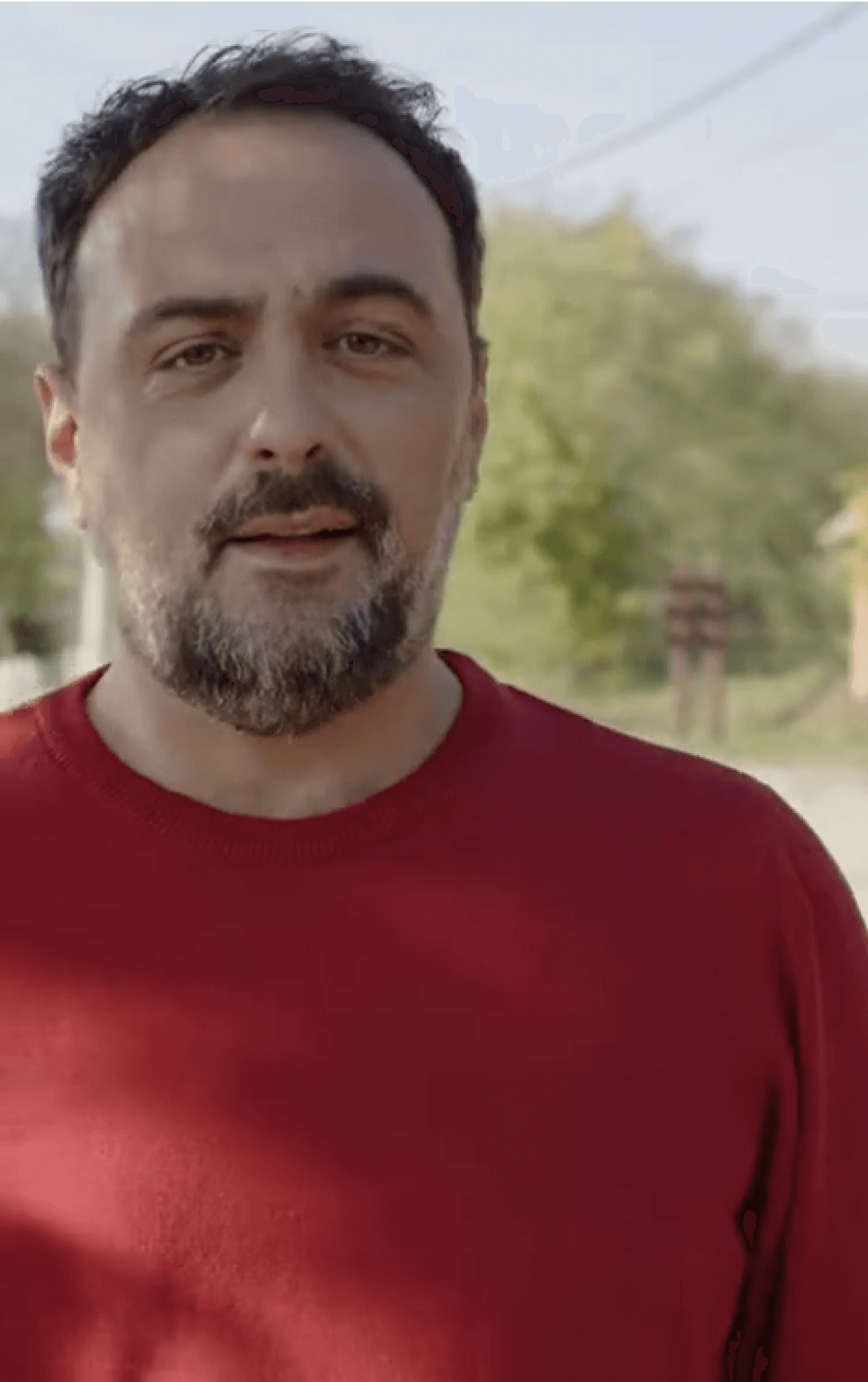
Beyond established local unreliable services, VOZZi faced a bigger hurdle: trust. Drivers in the Balkans were wary of sharing personal data with an app. Digital roadside assistance didn’t exist here before, so people had no mental model, no proof it worked, and no reason to trust it.

Baseline metrics

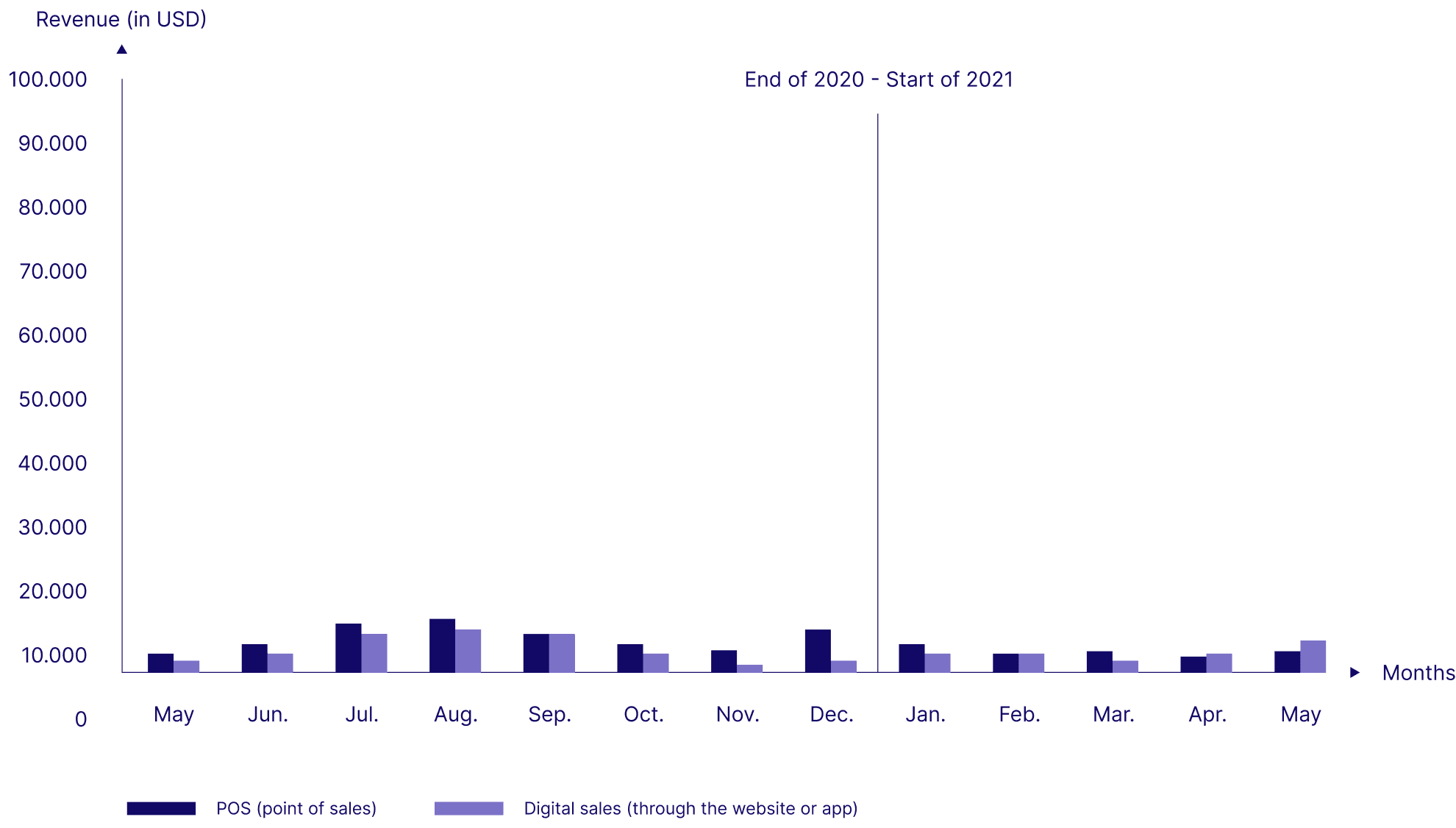
CMS analytics showed an average of about $600 in daily plan revenue, with seasonal spikes up to $1,300, still not enough to meet investor KPIs.

Research


Research

Data from analytics, call-center calls, and POS feedback showed one thing: users weren’t rejecting roadside assistance, but the uncertainty around it. I ran targeted research to understand their trust barriers and dropout points.

Research Methods

1:1 semi-structured interviews

To explore mental models, trust gaps and past experiences.

Prototype usability tests (Maze for Figma)

To validate flow clarity and spot drop-offs.

Call-center transcript analysis

To extract recurring complaints, questions and patterns.

POS (point of sale) seller feedback

To understand in-person purchase objections.

Interviews

I interviewed 8 drivers across the Balkans. Their varied experience and low digital trust helped uncover why drivers hesitate to rely on digital roadside assistance.

Target users

Active drivers in Serbia, Bosnia, North Macedonia

Age range

23–57

Criteria

Mix of young as well as experienced drivers with past roadside assistance experience

Digital trust profile

Medium to low

Recruitment method

Personal networks, referral from towing partners, call-center leads

Problem

Problem

User needs

User needs

How might we

How might we

KPIs

KPIs

Drivers don’t trust digital roadside assistance, especially when asked to enter personal information.

Drivers don’t trust digital roadside assistance, especially when asked to enter personal information.

A transparent experience that clearly explains how much the plan costs and exactly what services you get with it.

A transparent experience that clearly explains how much the plan costs and exactly what services you get with it.

How might we make the onboarding and purchase experience feel safe, predictable, and trustworthy?

How might we make the onboarding and purchase experience feel safe, predictable, and trustworthy?

  • Activation rate

  • Drop-off reduction on onboarding and purchase screens.

  • Activation rate

  • Drop-off reduction on onboarding and purchase screens.

Users often abandon the towing request flow because they fear hidden fees or unreliable providers.

Users often abandon the towing request flow because they fear hidden fees or unreliable providers.

Clear pricing, verified partners, and reassurance that help will actually arrive.

Clear pricing, verified partners, and reassurance that help will actually arrive.

How might we present costs and service details upfront to reduce hesitation?

How might we present costs and service details upfront to reduce hesitation?

  • Completed purchase flow

  • Time-to-confirmation

  • User satisfaction

  • Completed purchase flow

  • Time-to-confirmation

  • User satisfaction

Most drivers rely on informal towing contacts and don’t understand the value of a digital assistance plan.

Most drivers rely on informal towing contacts and don’t understand the value of a digital assistance plan.

A simple explanation of VOZZi’s benefits compared to calling random towing services.

A simple explanation of VOZZi’s benefits compared to calling random towing services.

How might we communicate VOZZi’s advantages in a way that’s instantly understood?

How might we communicate VOZZi’s advantages in a way that’s instantly understood?

  • Conversion from free to paid plans

  • POS sales

  • Campaign performance

  • Conversion from free to paid plans

  • POS sales

  • Campaign performance

Users are unsure whether VOZZi works in their exact city or region, which leads to hesitation.

Users are unsure whether VOZZi works in their exact city or region, which leads to hesitation.

Clarity about coverage, arrival time, and service availability via the purchased plan.

Clarity about coverage, arrival time, and service availability via the purchased plan.

How might we show coverage and response expectations without overwhelming the user?

How might we show coverage and response expectations without overwhelming the user?

  • Reduced support inquiries

  • Reduced support inquiries

Competitors offer similar services but lack transparency and consistent user experience, creating a noisy and distrustful market.

Competitors offer similar services but lack transparency and consistent user experience, creating a noisy and distrustful market.

A reliable, consistent, digital-first solution that stands out in the region.

A reliable, consistent, digital-first solution that stands out in the region.

How might we leverage design to position VOZZi as the modern alternative in a dated market?

How might we leverage design to position VOZZi as the modern alternative in a dated market?

  • Market share growth

  • Brand sentiment

  • Referral rate

  • Market share growth

  • Brand sentiment

  • Referral rate

Persona


Based on call-center data and user interviews, 2 core personas emerged. Dragan and Marko.

Dragan (50)

Engineer

Short bio

Dragan is a middle-aged engineer. He is family oriented, conservative, and lacks trust in modern forms of digital assistance. Though he is highly frustrated with the quality of traditional services and is actively looking for an alternative.

Goals

  • Protecting his family while on the road.

  • Having a secure and trustworthy roadside assistance.

  • Avoiding unpredictable costs from dishonest towing services.

  • If he decides to give his personal information to an app, he wants to know in detail what he gets in return.

Frustrations

  • He got screwed over multiple times by towing services with hidden fees, delays, unprofessionalism.

  • Doesn’t like his personal info being used in apps.

  • He doesn’t understand the concept of a “digital plan”.

  • Has a fear that after activation, the service still won’t work.

Marko (27)

Copywriter

Short bio

Marko is young and tech-savvy, so VOZZi seems ideal. His friends use it and recommend it, but influenced by older, more experienced drivers, he still doubts the app’s transparency and real-world effectiveness.

Goals

  • Having a fast and easy solution regarding driver’s assistance.

  • Not to have to call 10 different numbers if his car breaks.

  • That he only subscribes to things that have a good rep online.

  • Avoiding panic, he does not have much driving experience.

Frustrations

  • Reading online, how road assistance services are un-trustworthy.

  • He doesn’t know if VOZZi is instant use, or requires activation.

  • VOZZi seems “too good to be true”.

Journey Map


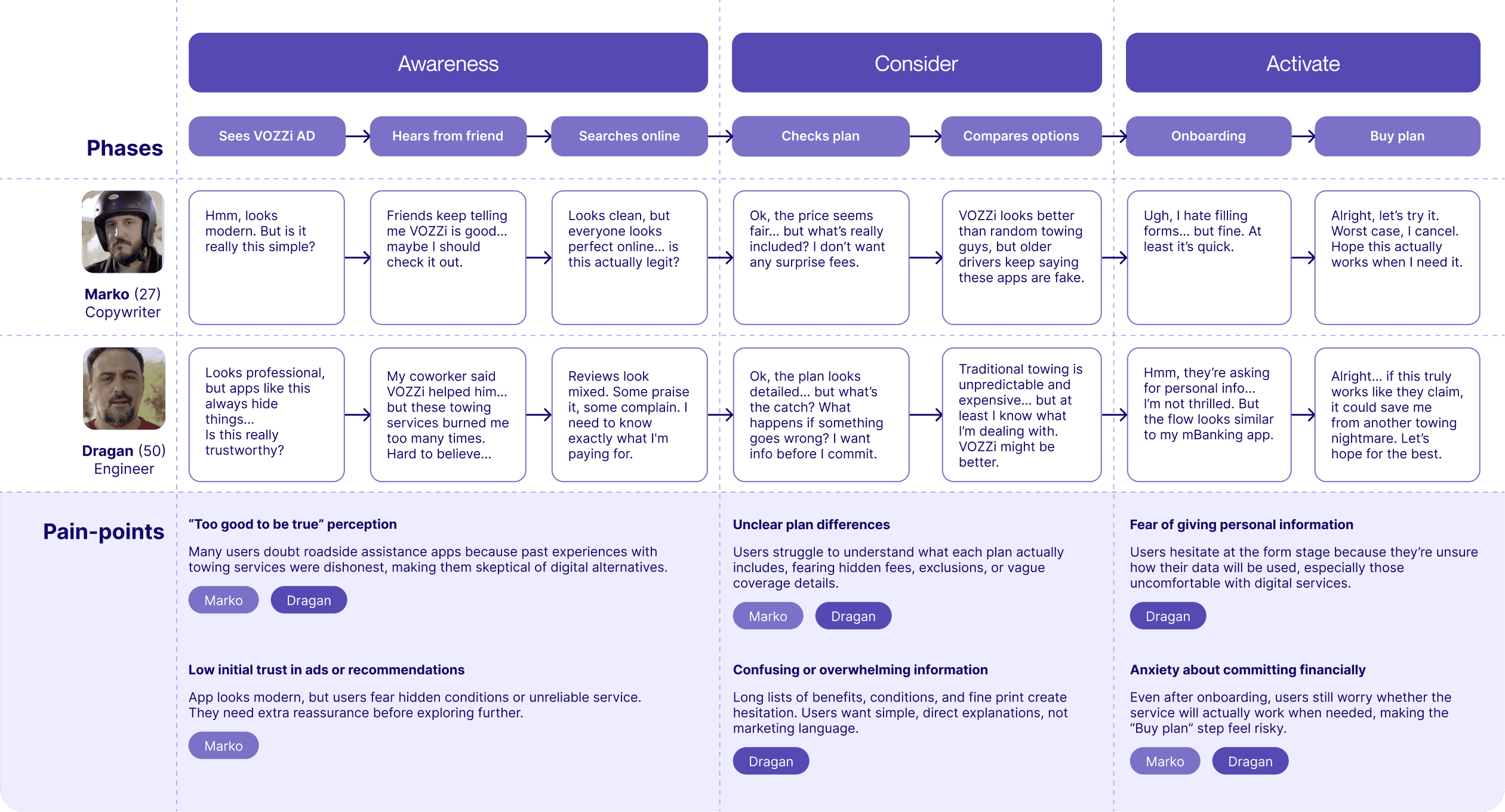
After defining the two key personas, I mapped their end-to-end journey using all gathered research insights. This helped shape a simpler onboarding experience and a clear, honest plan-purchase flow.

Wireframes

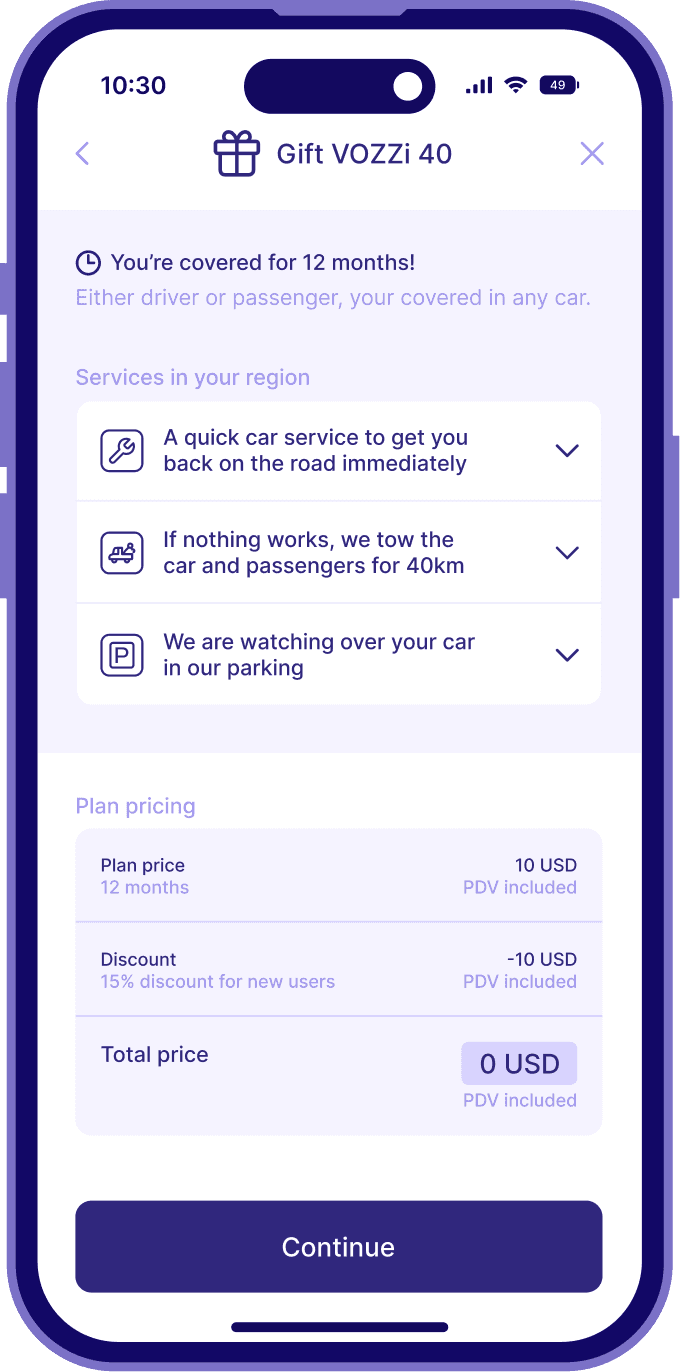
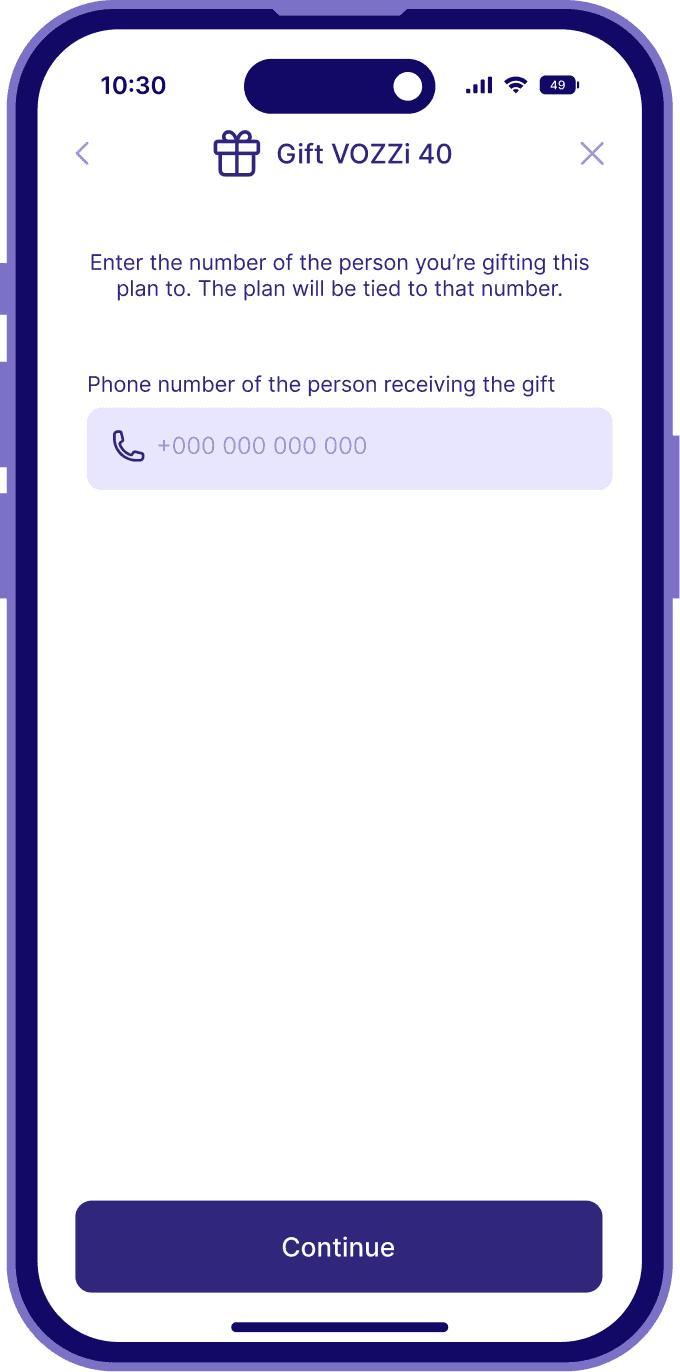
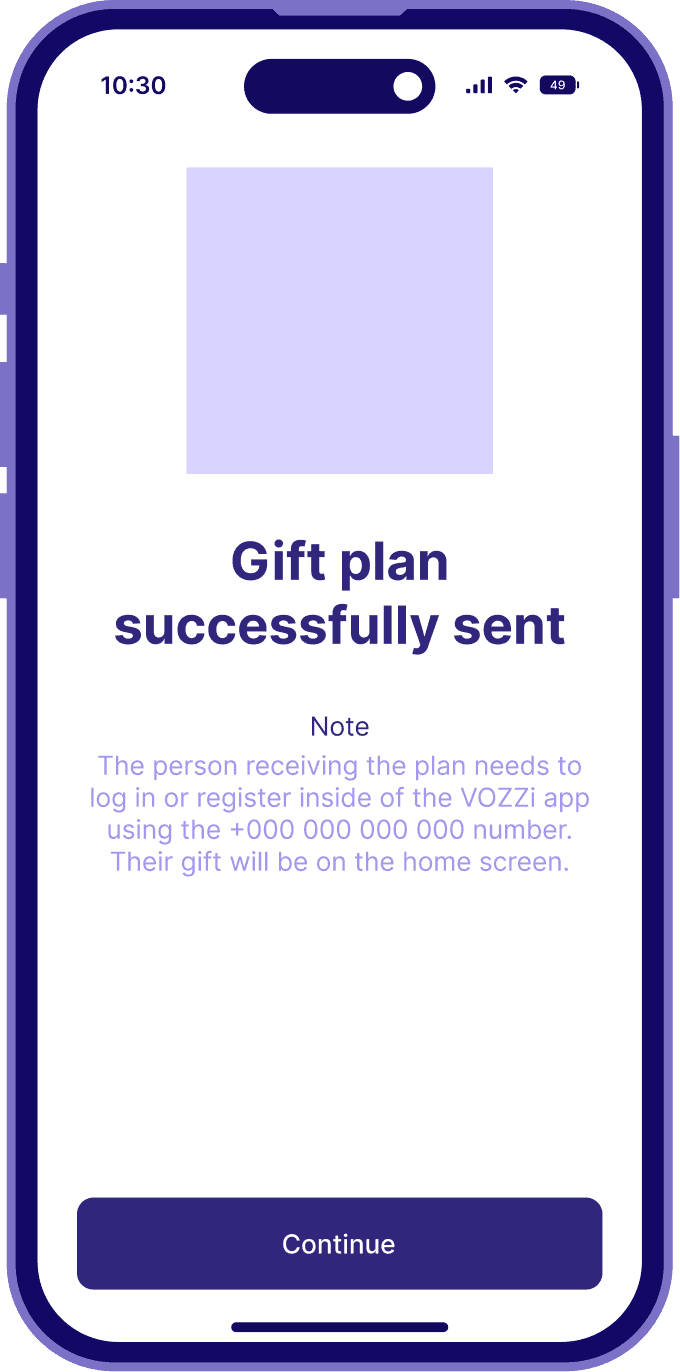
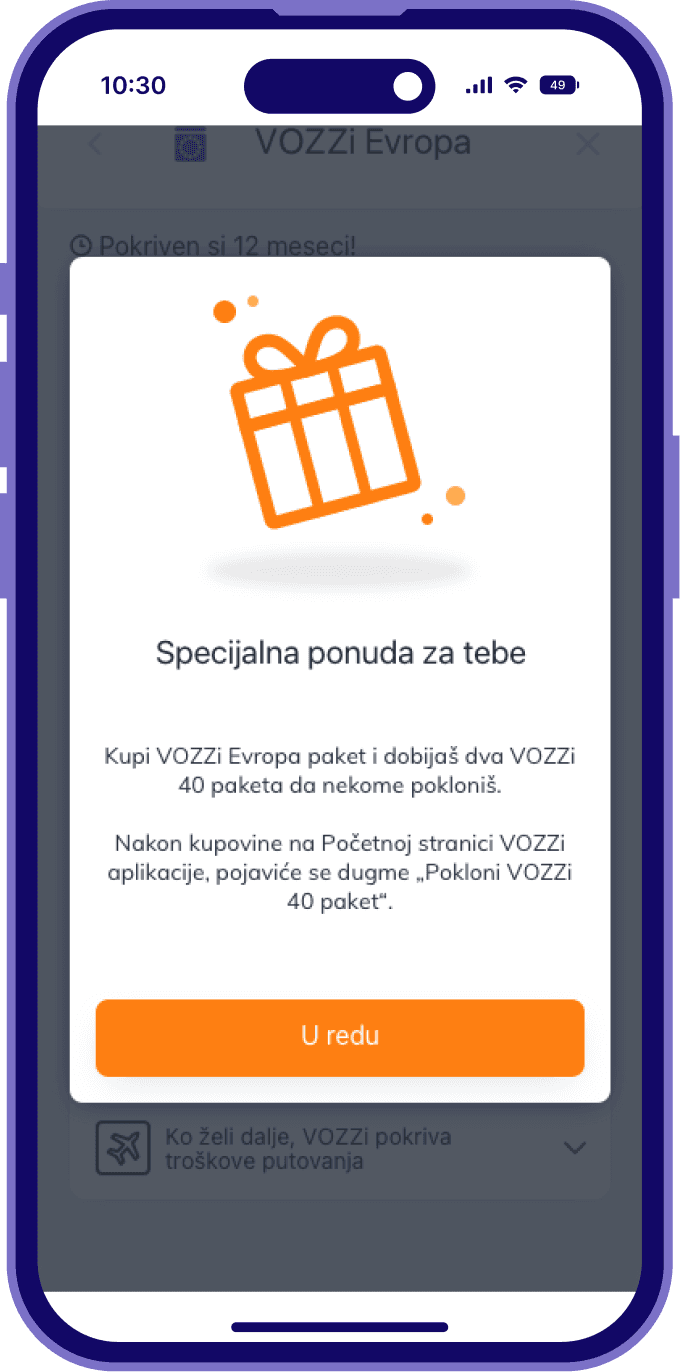
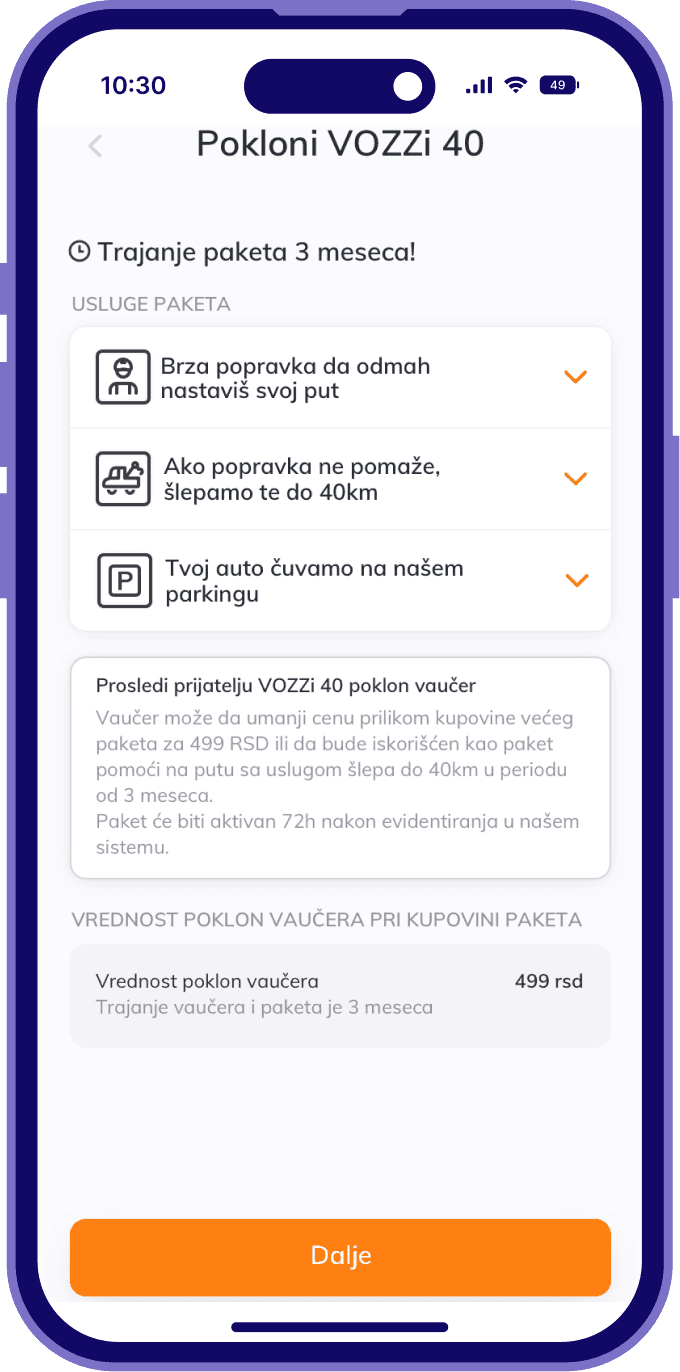
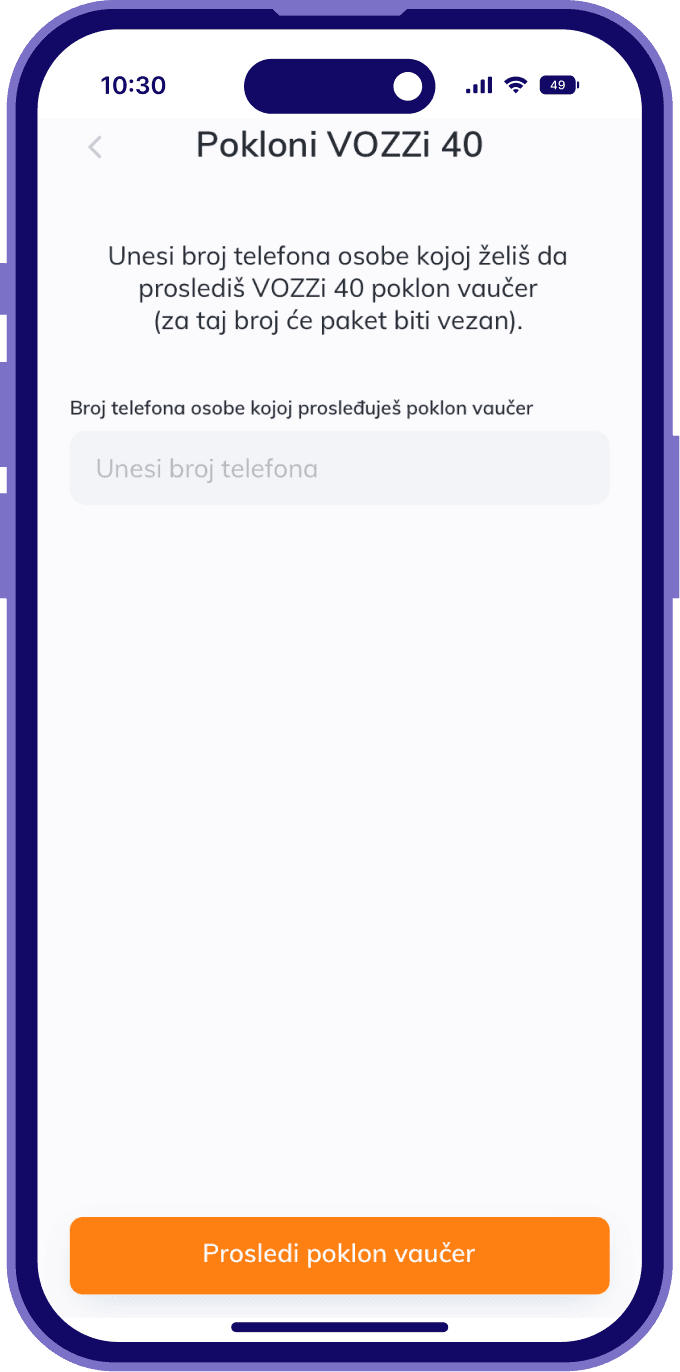
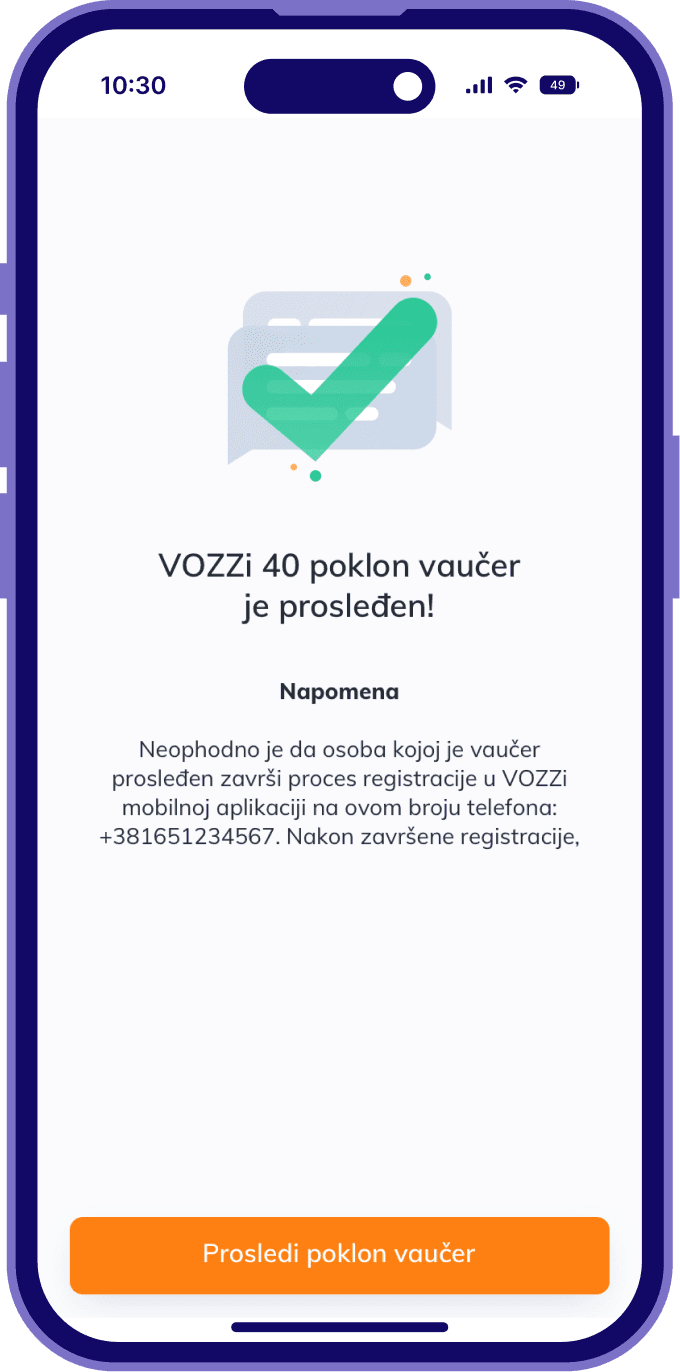
After several sessions with the dev team, I introduced a gifting flow to drive trusted referrals. I created low-fidelity prototypes and validated them with users in Maze before moving to high-fidelity design.
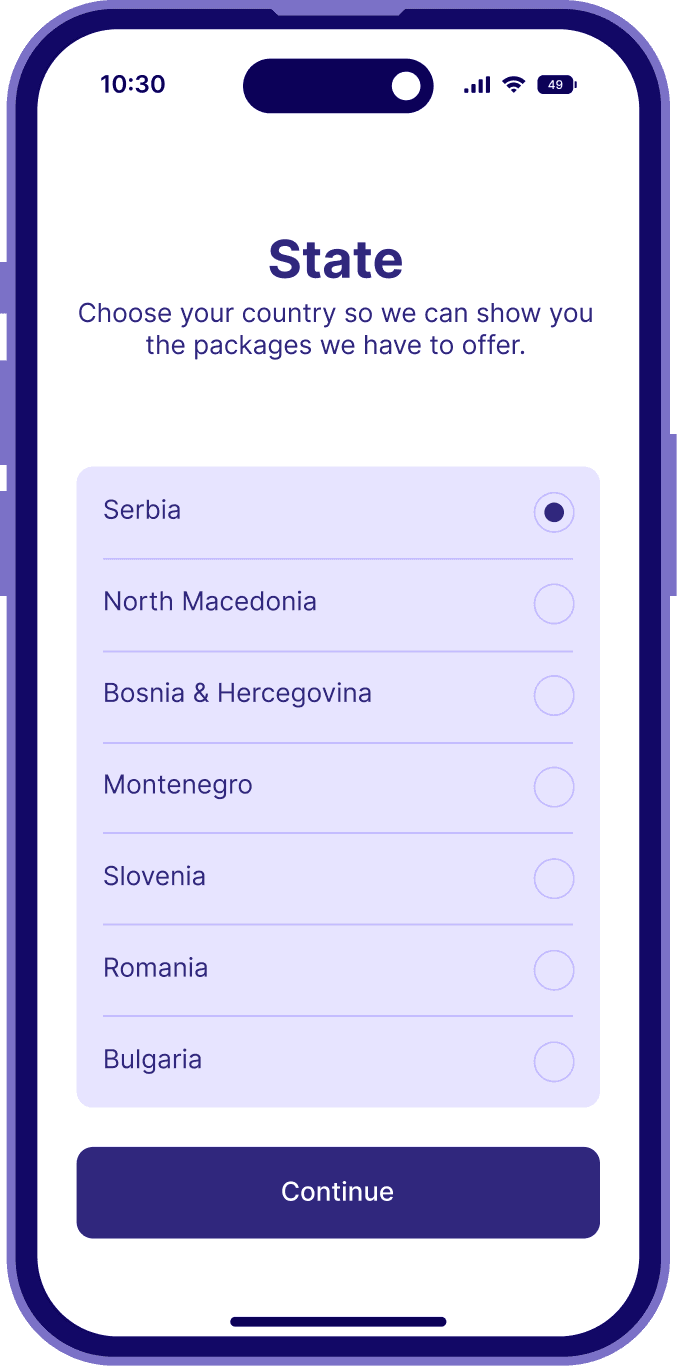
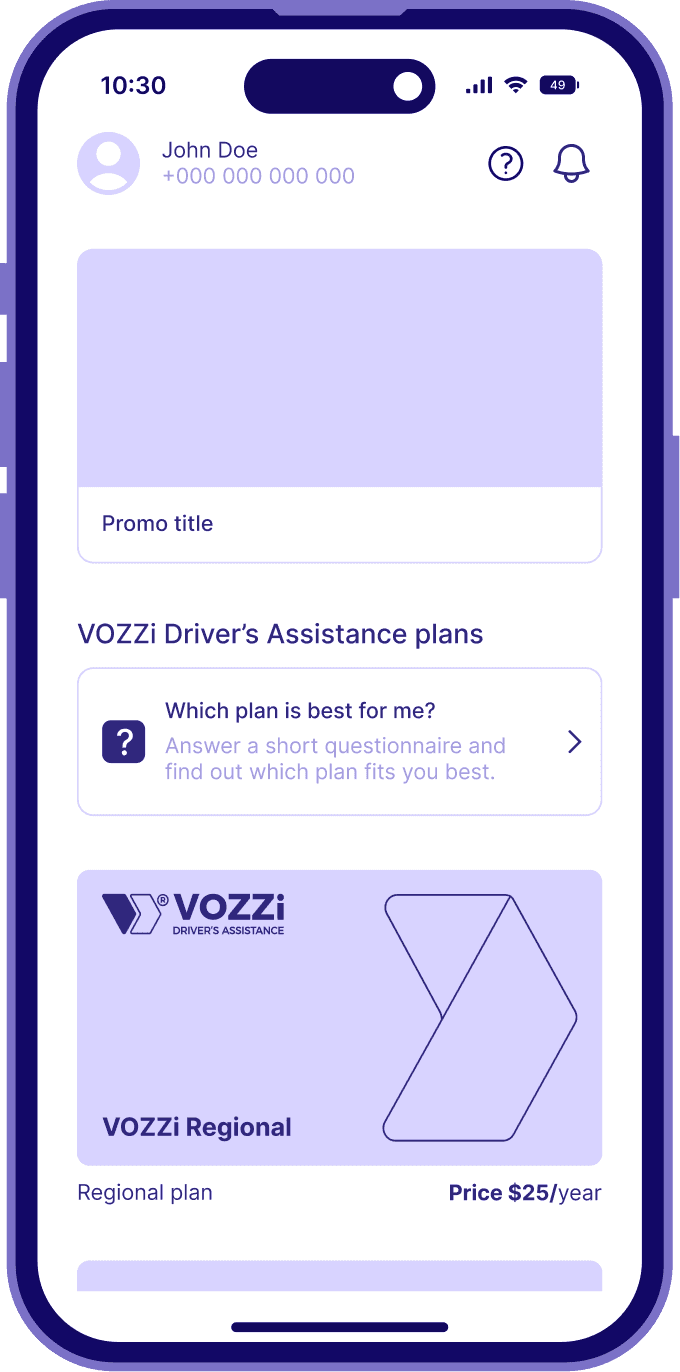
Registration user flow - main user flow for new users registering to the app.
Registration user flow - main user flow for new users registering to the app.
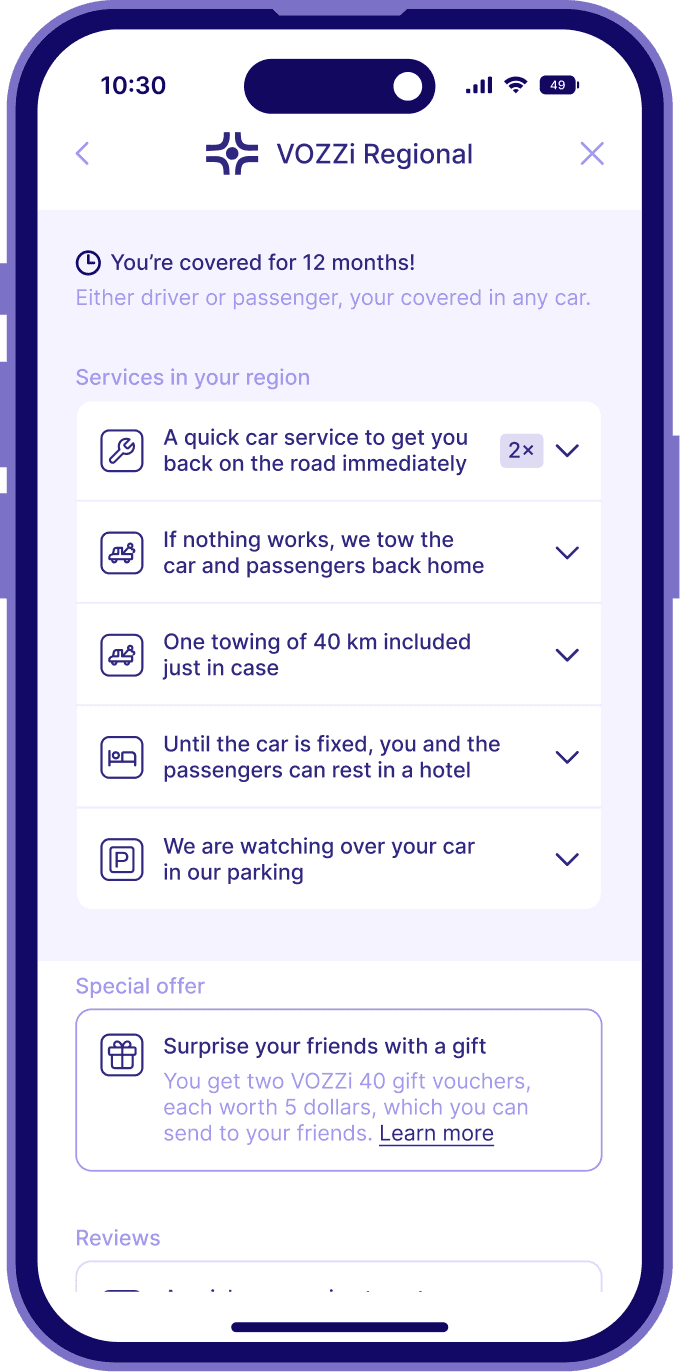
Gifting plans user flow - gifting a free plan to an old or new user.

Testing

To validate the new onboarding and referral introduction, I ran a usability study with 100 users, of which 80 completed the full flow.

Insight

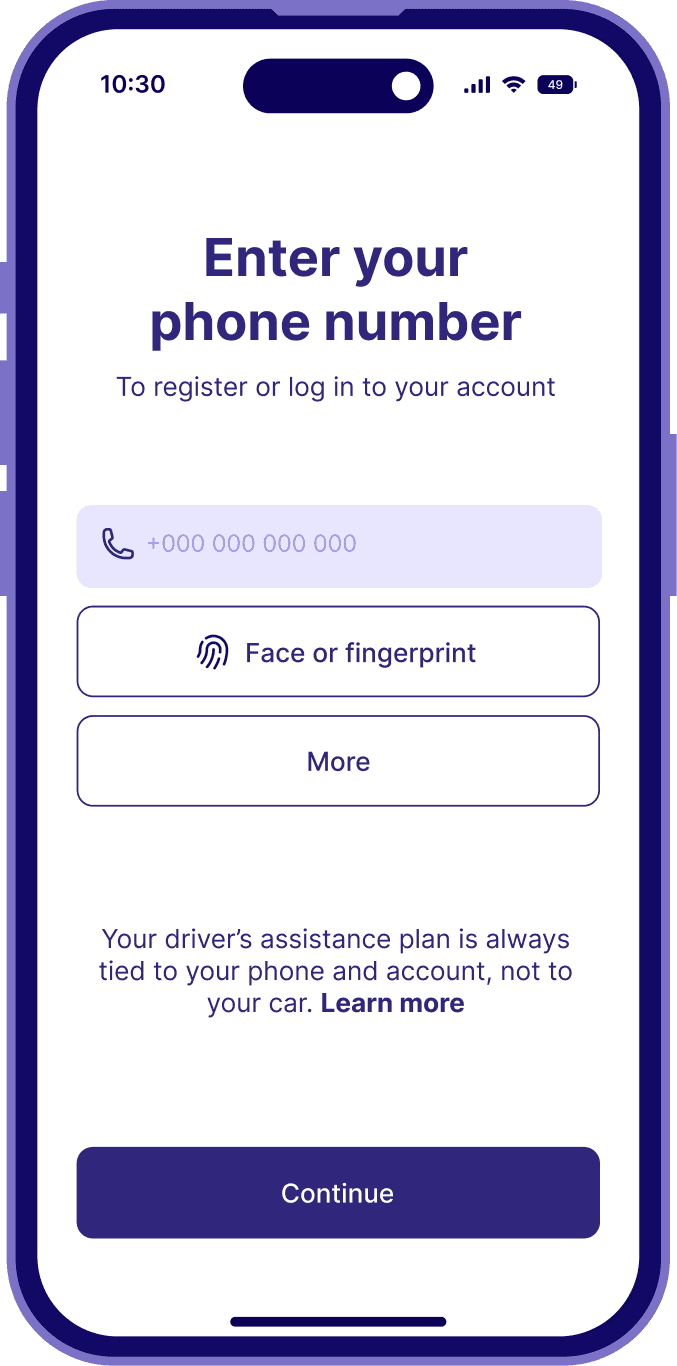
Users had no issues with onboarding and understood the plan was tied to their account, not their car. The friction appeared in the referral flow, where over 20 participants misunderstood the gifting mechanic and expected benefits from gifting free plans. This revealed a gap in communication and perceived value.

Solution

Based on feedback, I proposed an, incentive-driven referral model:


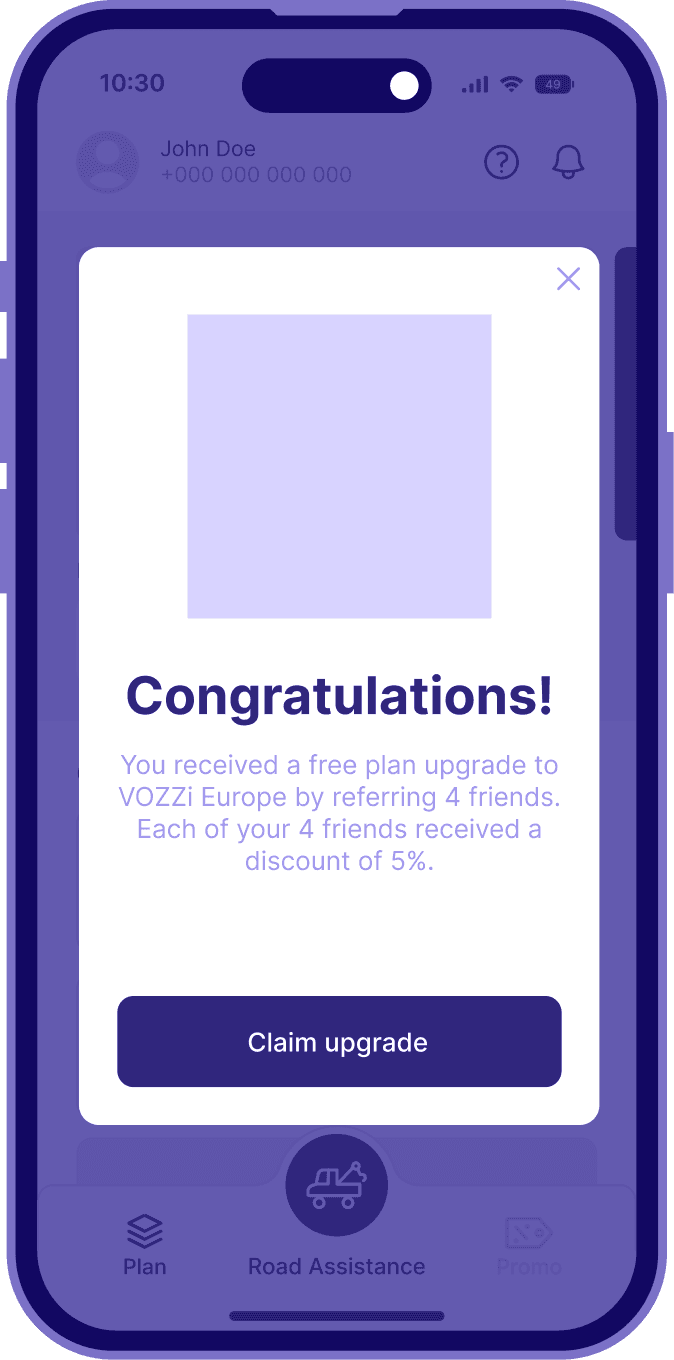
  • Refer 4 people → automatic plan upgrade

  • Refer 8 people → unlock the highest-tier plan

  • If already on the top plan → receive a base plan to gift

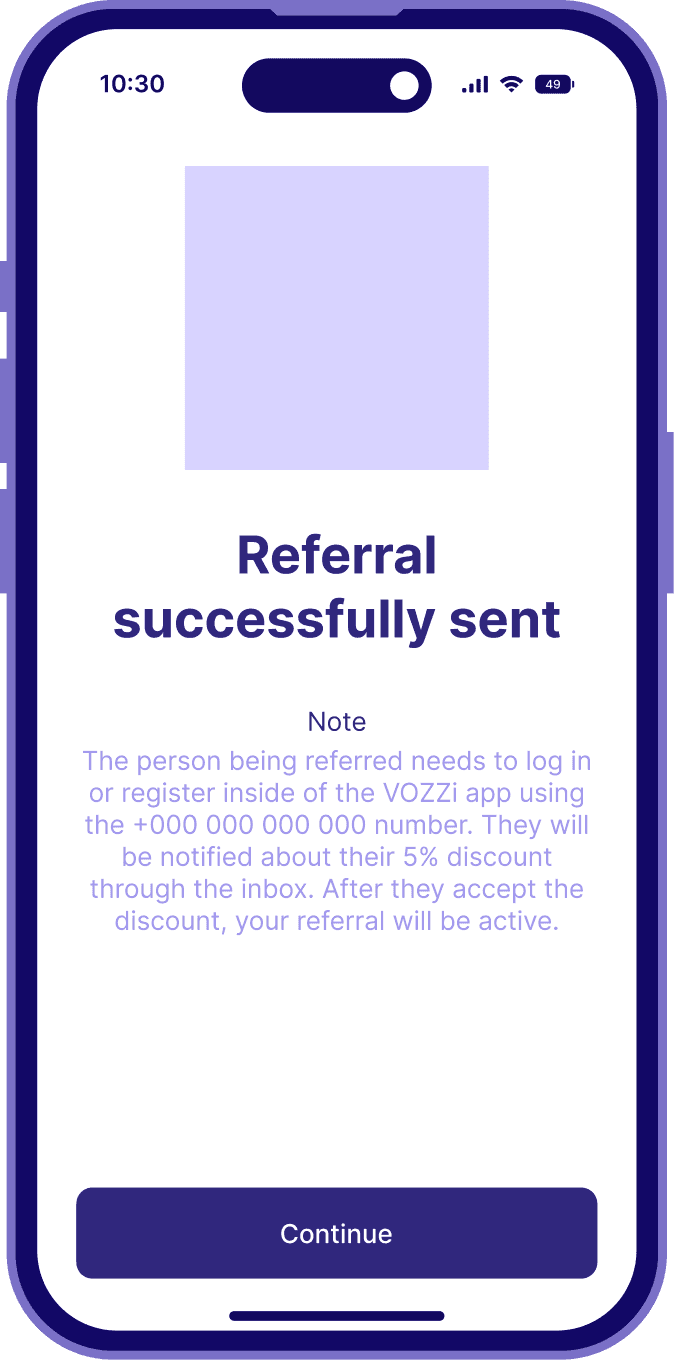
  • Every referred person gets a 5% discount

Validation

I suggested to the marketing team that we test the concept publicly by launching it as a small social media campaign to gauge real-world sentiment before development. The response was highly positive, confirming both the clarity and appeal of the new feature.

Revision

After positive initial feedback, I refined the flow and retested it. All 75 participants immediately understood the new gifting mechanic and reported a positive experience, confirming the direction was right.
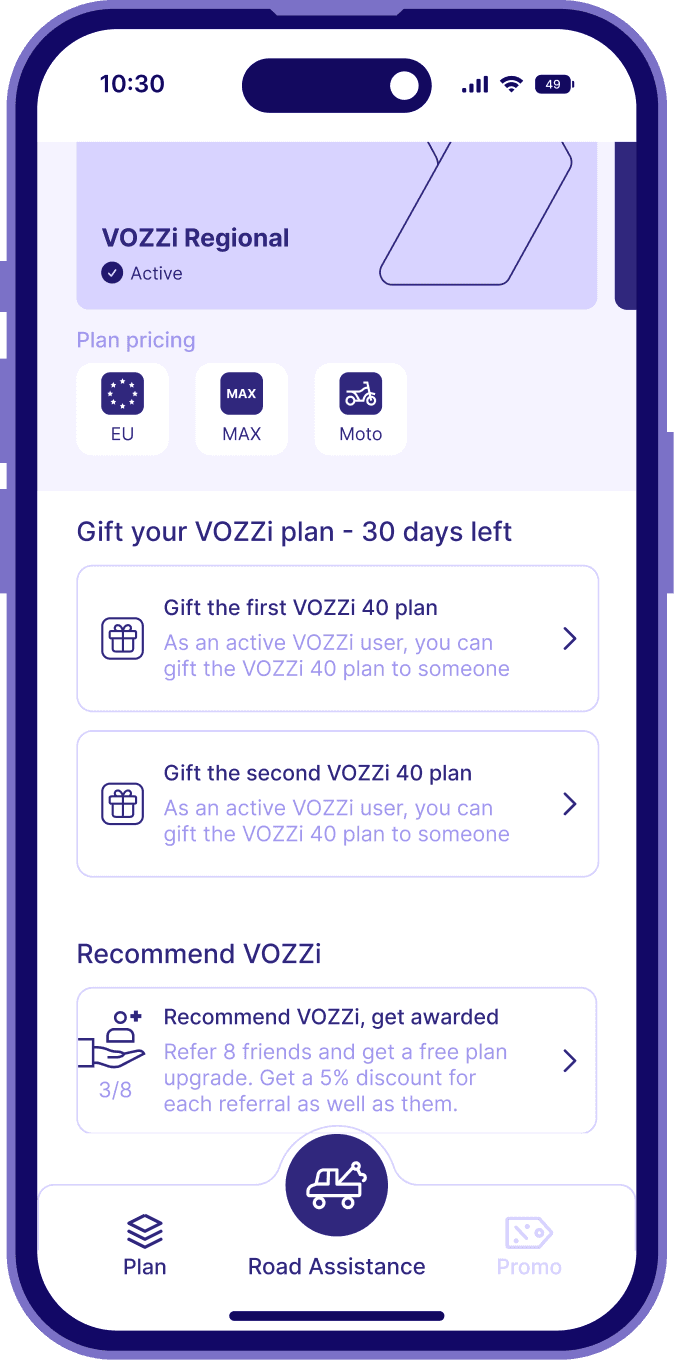
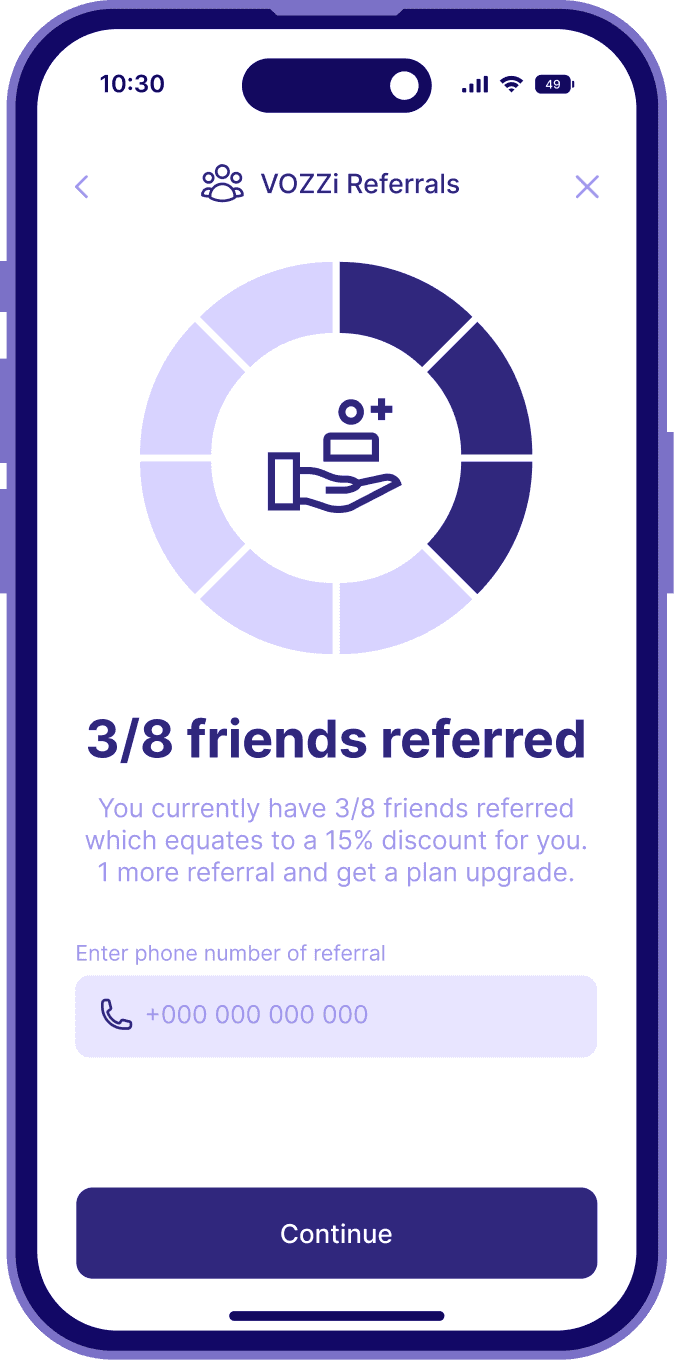
Gifting plans user flow - gifting a free plan to an old or new user.

Shipped design

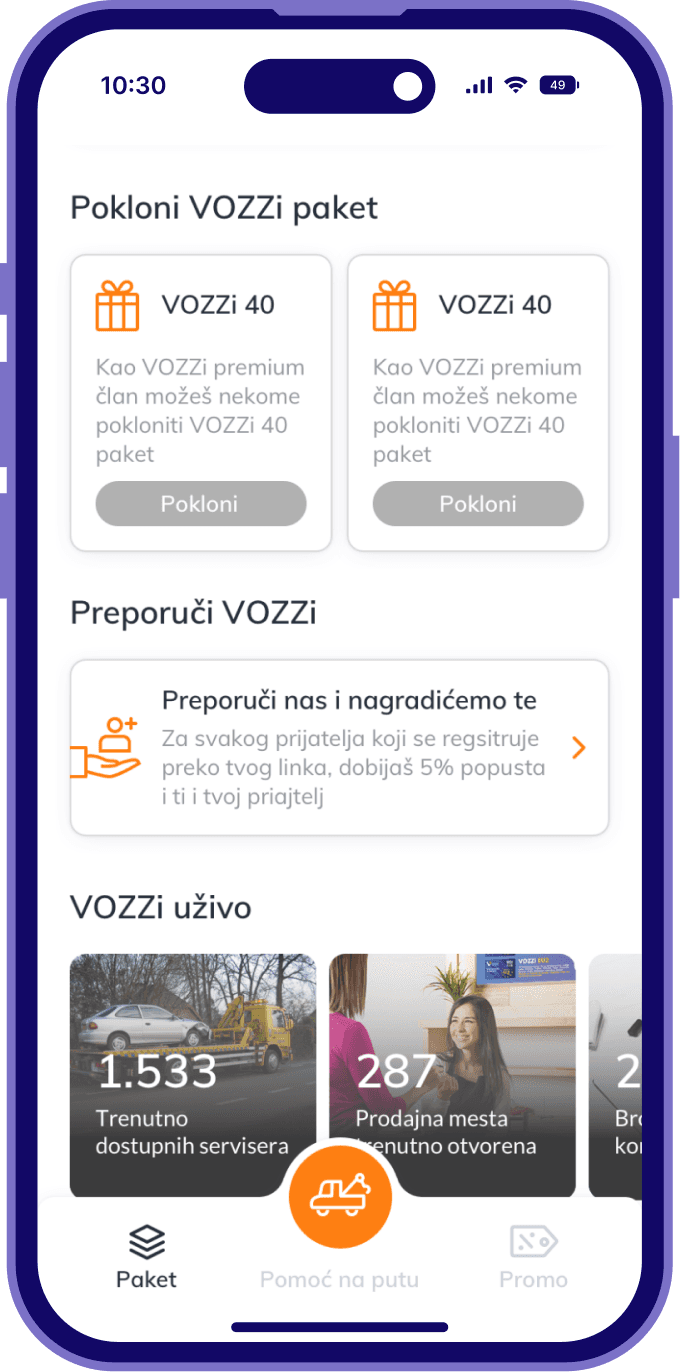
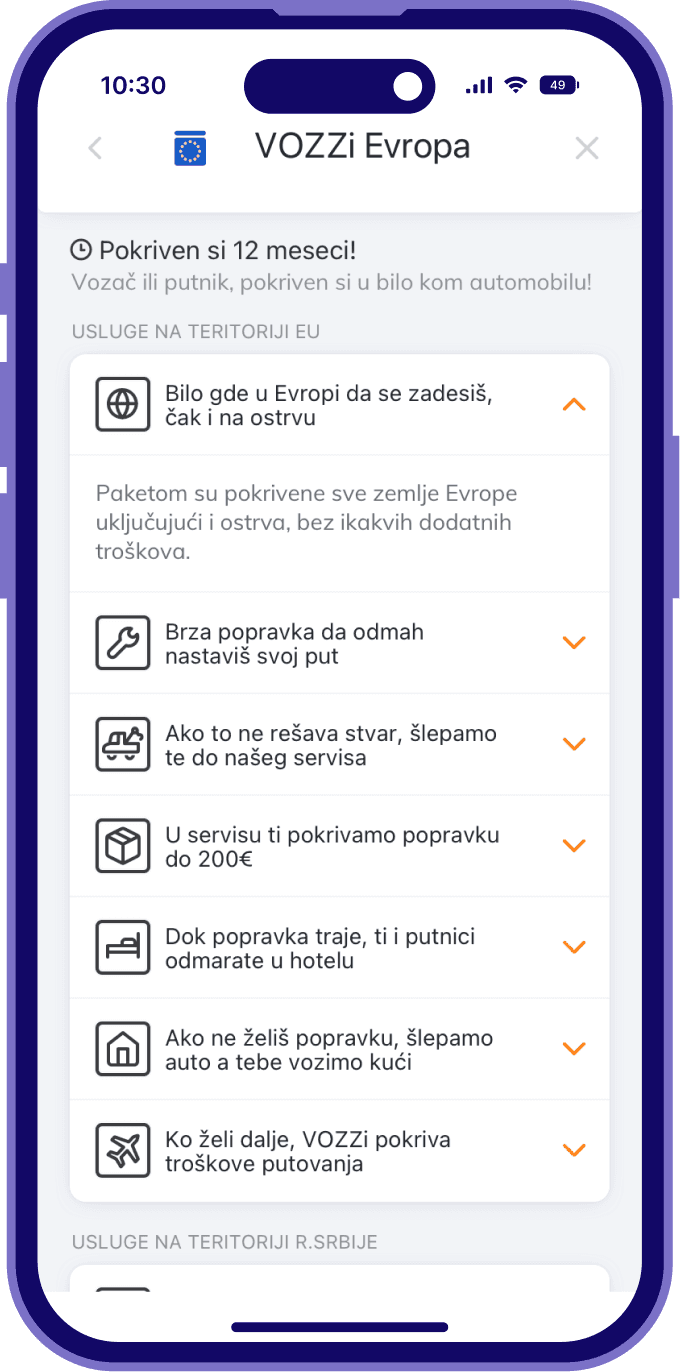
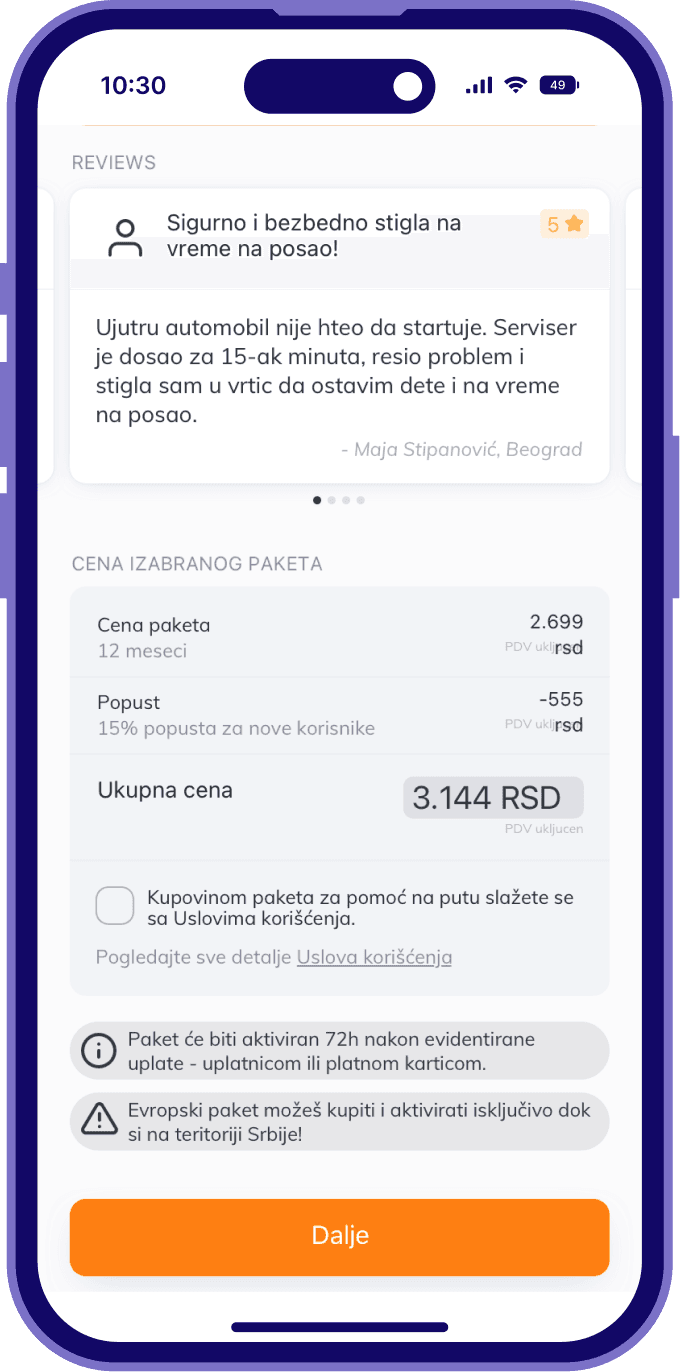
After the updates, the app gained 15,000 users in the first month. Better onboarding, clearer referrals, and coordinated TV, and brand campaigns boosted trust and helped drive 4× revenue and a doubled user base.
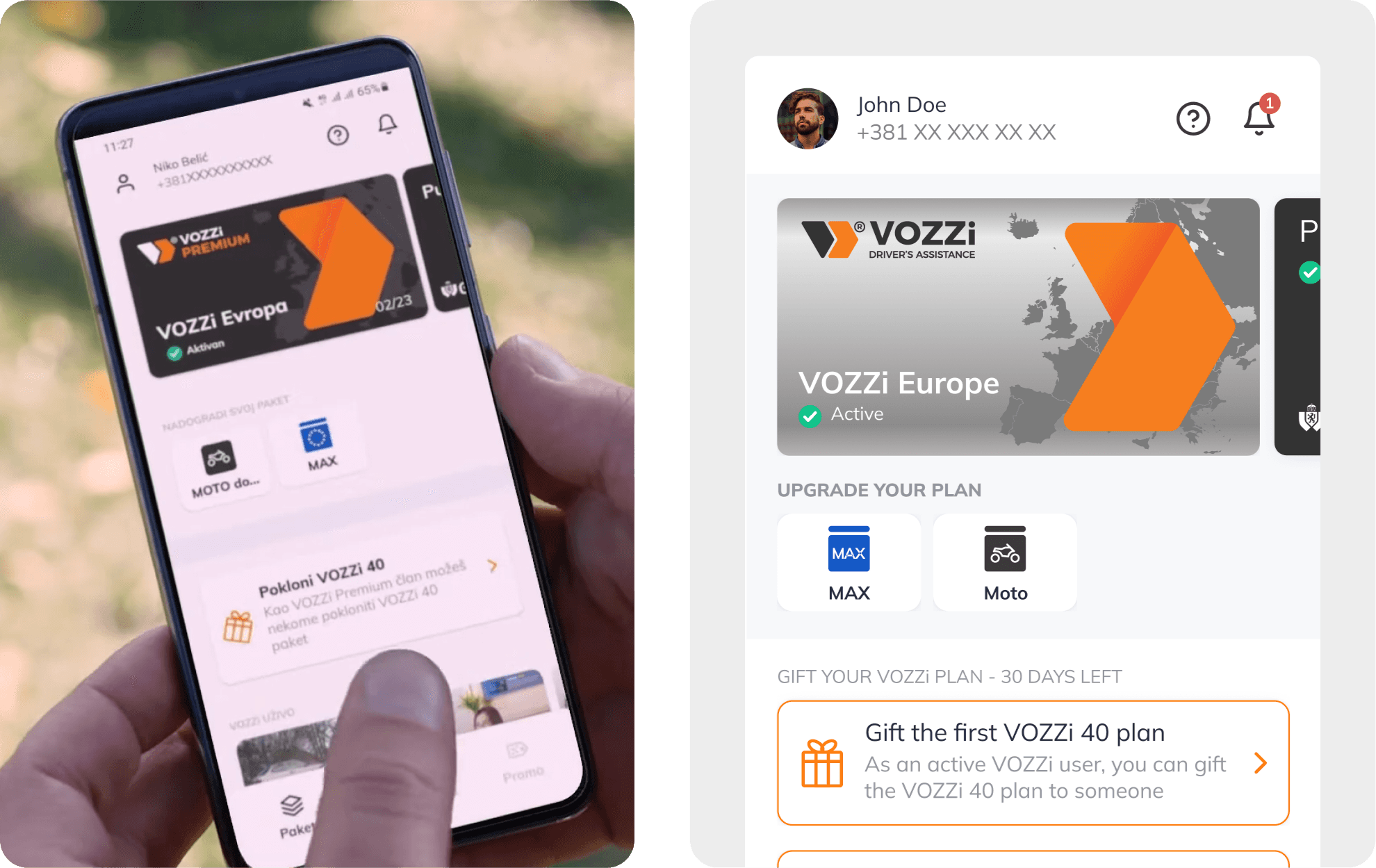
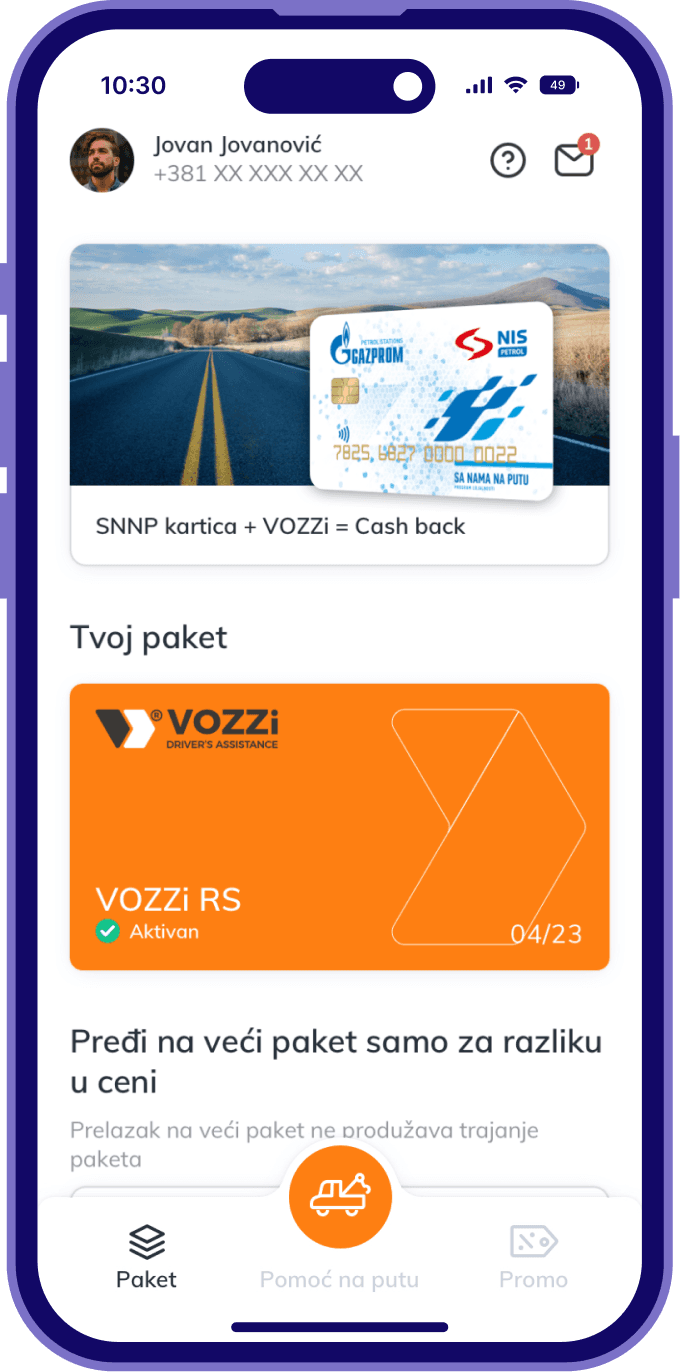
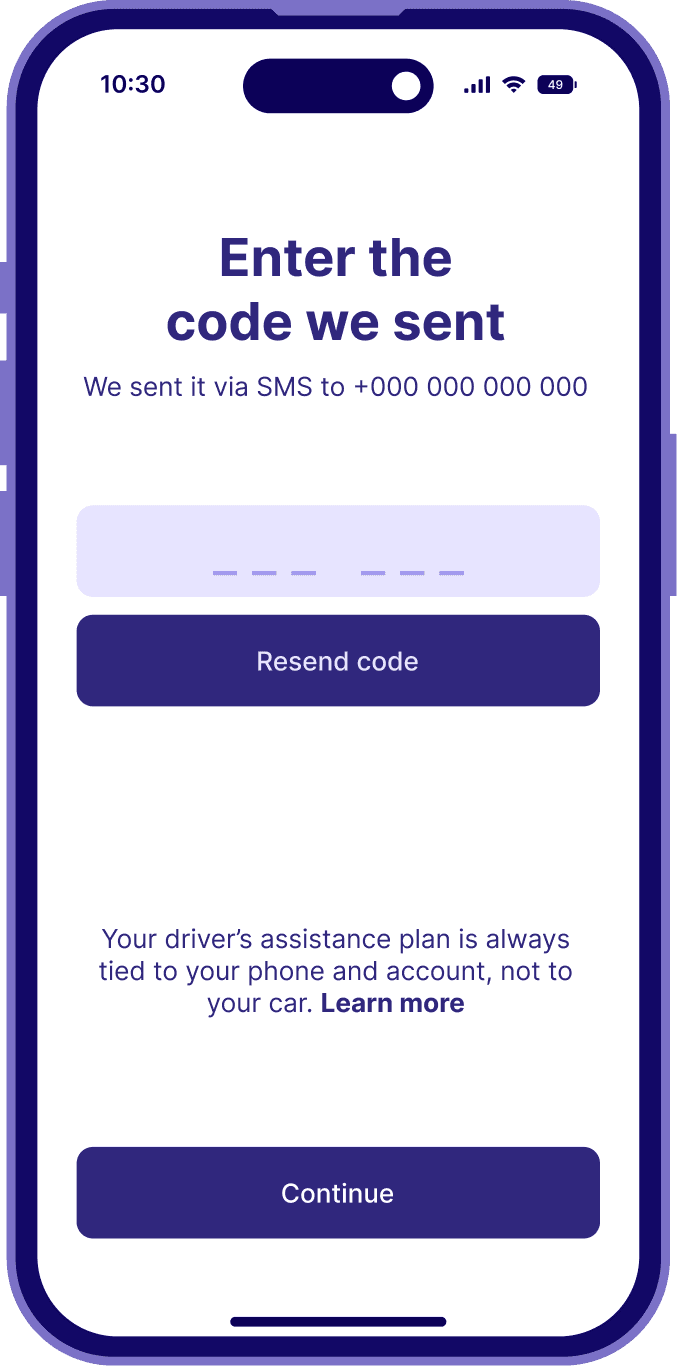
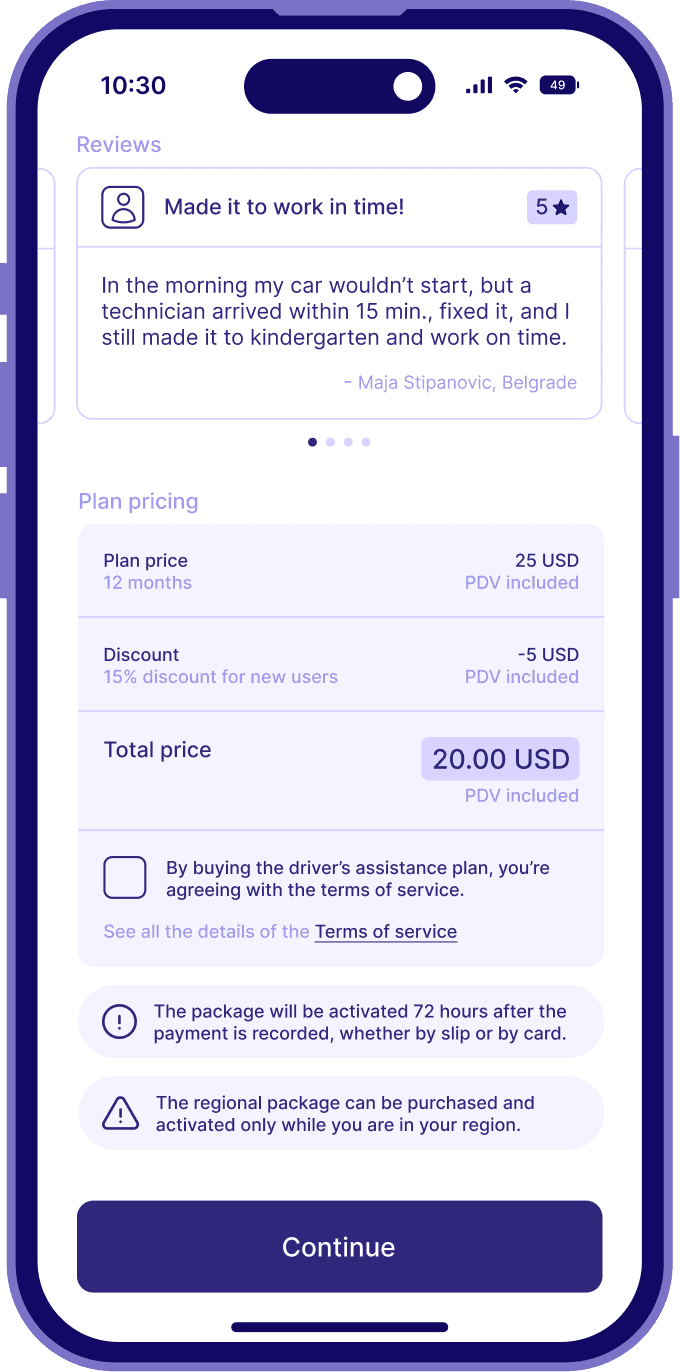
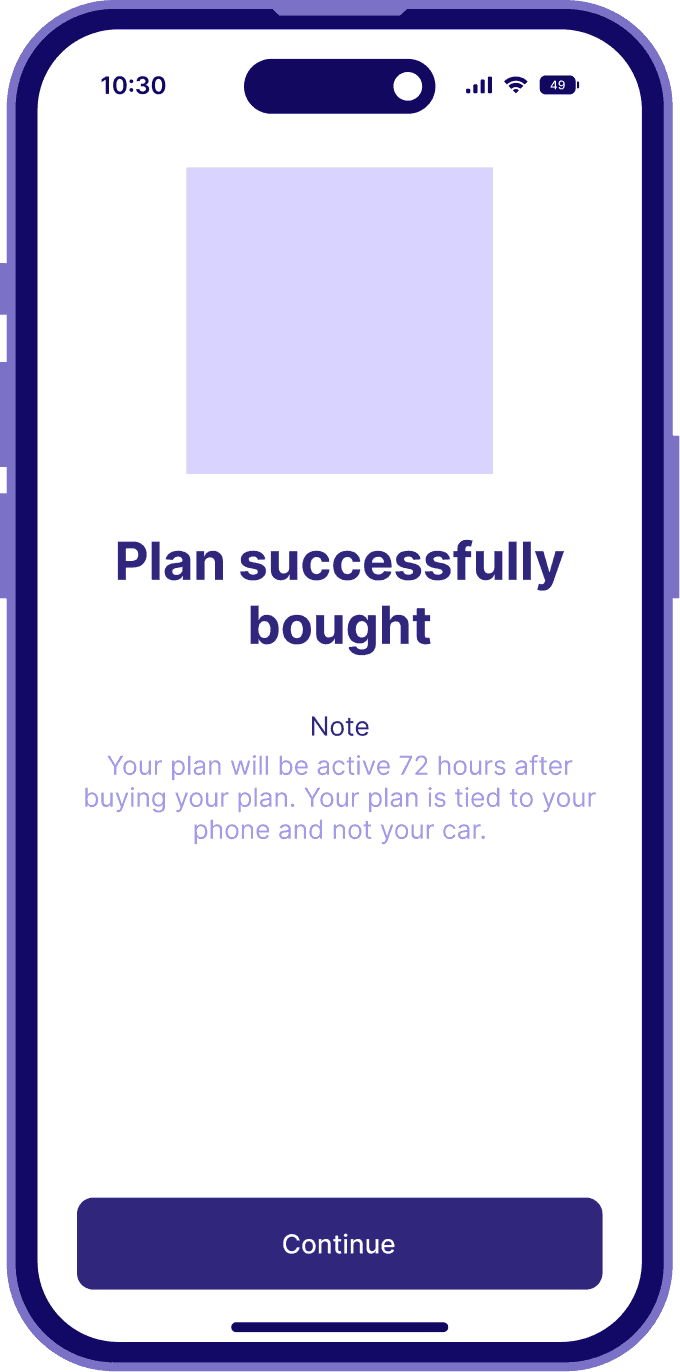
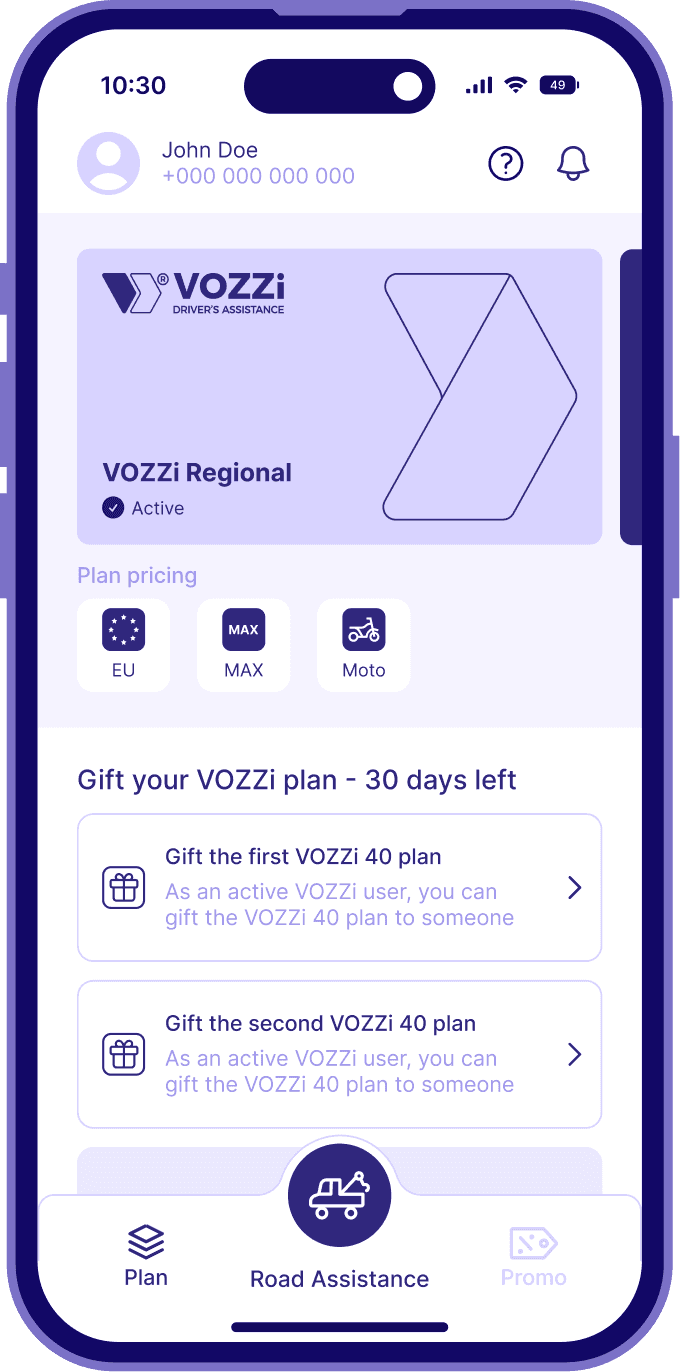
Final shipped designs - polished through iteration and validated by real user behavior.

Outcome

Improved onboarding, clearer referral flows, and stronger brand communication helped drive VOZZi’s growth. Between 2020 and 2023, these combined efforts supported a steady rise in daily revenue, peaking at $29,902 in a single day.
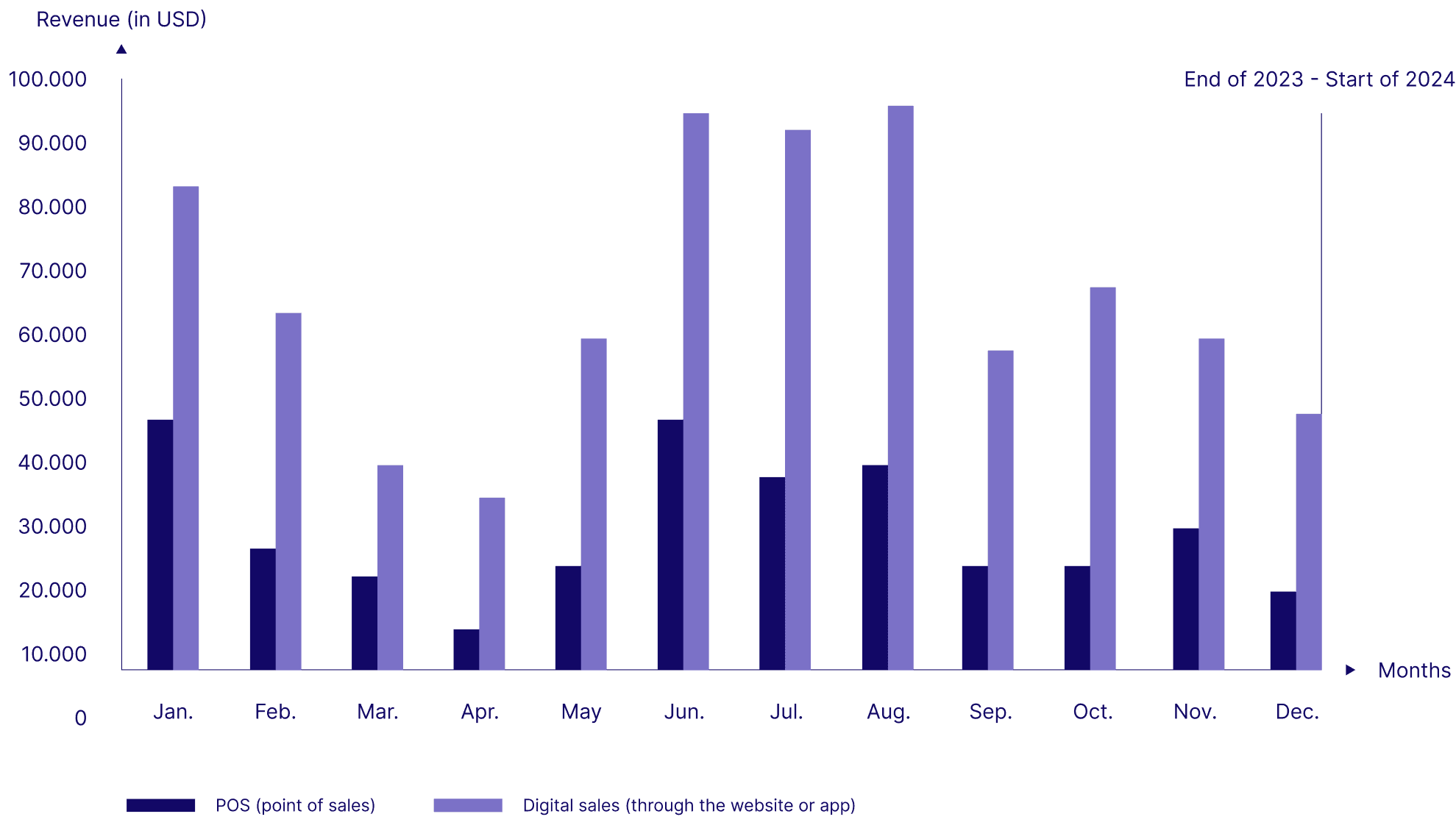
What I'd do next

Personalize onboarding to user context

Tailor the first-time experience based on trust level, driving experience, and region. New drivers and older, skeptical drivers need different explanations and reassurance.

Introduce in-app trust indicators

Surface live towing metrics, verified partner ratings, and average response times in context to reinforce reliability and reduce hesitation for first-time users.

A/B test plan explanations and pricing clarity

Run UX copy experiments on how coverage, response times, and plan differences are presented to further reduce confusion and improve purchase flow completion.